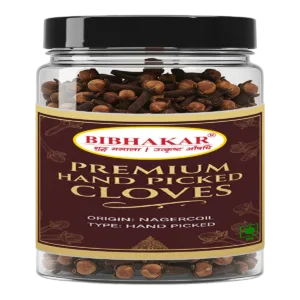
A quick laung freshness test takes a minute: check the clove heads are intact, press one with a fingernail to see a little oil, and smell it for a sharp, warm aroma. Cloves (laung) are the dried flower buds of Syzygium aromaticum. Their flavour lives in the oil inside each bud, so fresh cloves feel slightly oily, not dusty.
Key facts: Bibhakar Spices whole cloves
- Name: cloves, laung (Syzygium aromaticum)
- Origin: Nagercoil, Tamil Nadu
- Grade: hand-picked whole buds
- Form: whole dried buds, packed in clear jars
- Jar sizes: 10 g (₹59) to 500 g (₹1,679)
Bibhakar Spices sells hand-picked Nagercoil cloves (laung) in jars from 10 g to 500 g.
What does a fresh clove look like?
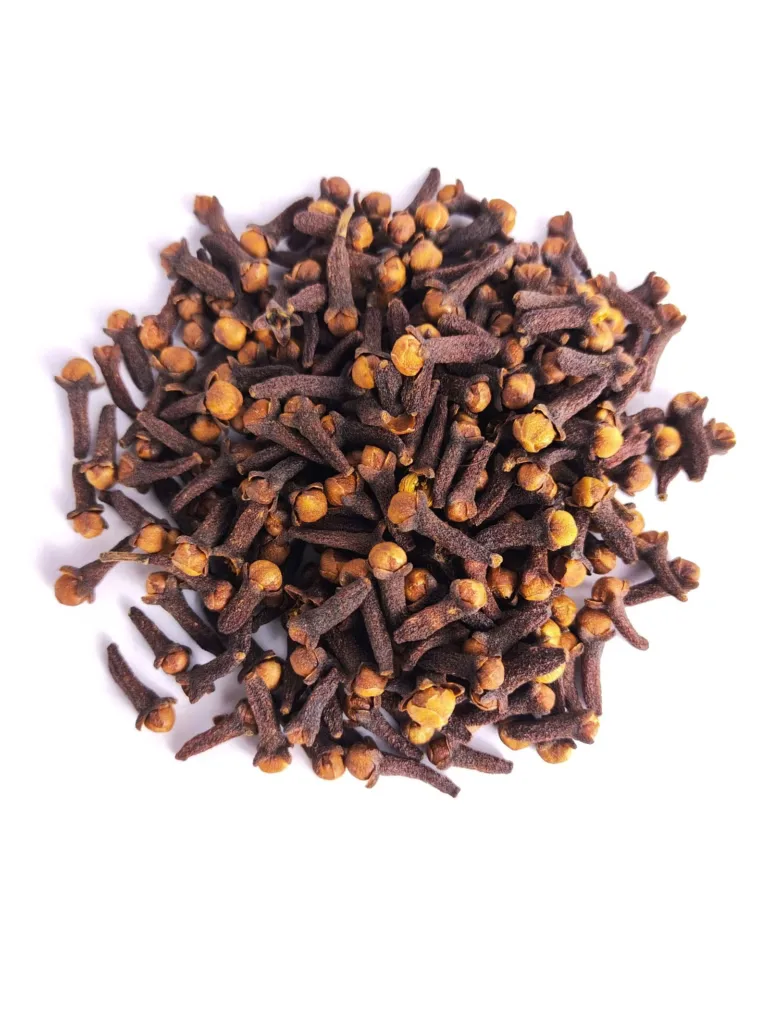
A clove has two parts: the long stem and the round head at the top, which is the unopened flower bud. Most of the aroma sits in the head.
Signs of good, fresh cloves:
- Intact heads. Most cloves in the jar still have their round heads. A jar full of headless stems has lost much of its flavour.
- Even colour. Dark reddish brown, not grey or faded.
- Plump, not shrivelled. Fresh cloves look full and slightly glossy.
- Few broken pieces. Dust and fragments at the bottom of a pack point to rough handling or old stock.
How do you do the laung freshness test at home?
- Look. Tip ten cloves onto a plate. Count how many still have heads.
- Press. Push your fingernail into the stem of one clove. A fresh clove releases a tiny bead or sheen of oil. A dry, old clove feels woody and leaves nothing.
- Smell. Crush a head between your fingers. The smell should be strong and immediate, warm and slightly numbing.
- Taste (optional). Touch a crushed clove to your tongue. Fresh cloves give a clear, tingling warmth.
If cloves fail the press and smell checks, they will still season food, but you will need more of them for the same flavour. Our checks before packing, including “intact heads, oily when pressed”, are listed on The Bibhakar Standard.
How are whole cloves used in Indian cooking?
Cloves are strong, so a few go a long way. Common uses:
- Tadka for rice and pulao. Two to four cloves fried in ghee with bay leaf and cardamom at the start.
- Biryani. Whole cloves in the rice water and in the meat or vegetable layer.
- Garam masala. Cloves are one of the core whole spices, roasted and ground with cardamom, cinnamon and pepper.
- Chai. One or two cloves crushed into the pot with ginger and cardamom.
- Pickles and chutneys. Ground cloves add warmth to sweet mango chutney.
Remove whole cloves before serving if you can, or warn your guests. Biting into one is a sharp surprise.
For more ideas, our earlier post covers uses of cloves in the kitchen.
How many cloves are in 10 grams?
Clove size varies by harvest, so counts differ from lot to lot. The simplest way to know for your jar is to weigh a small batch on a kitchen scale and count. For recipes, it is more useful to think in pieces: most home dishes call for two to six cloves, which is a small fraction of a 10 g jar.
That is why small jars make sense for cloves. Our 10 g jar costs ₹59, and the 50 g jar (₹209) works out to ₹418 per 100 g for families who cook biryani or make garam masala often.
| Jar size | Price | Price per 100 g |
|---|---|---|
| 10 g | ₹59 | ₹590 |
| 25 g | ₹129 | ₹516 |
| 50 g | ₹209 | ₹418 |
| 100 g | ₹389 | ₹389 |
| 250 g | ₹879 | ₹352 |
| 500 g | ₹1,679 | ₹336 |
Prices are our live jar prices on 8 November 2026, including GST.
How should you store cloves so they stay fresh?
Clove oil escapes with heat, light and air. To keep it in the bud:
- Keep cloves whole until you need them.
- Store the jar closed, away from the stove and out of direct sunlight.
- Use a dry spoon. Moisture can make cloves clump and turn musty.
- Buy a jar size you will use in a few months, rather than a large bag that sits open.
America’s Test Kitchen puts the shelf life of whole spices at about two years, against about a year for ground spices, which is one more reason to buy cloves whole.
Where to buy whole cloves
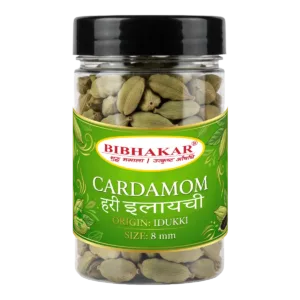
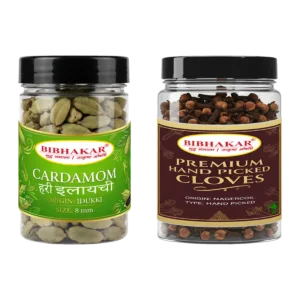
Our whole cloves (laung) from Nagercoil are packed whole in clear jars, so you can check the heads before you open the cap. If you also need cardamom, the Kitchen Essentials Box pairs the two in one gift box.
Frequently asked questions
How can I tell if cloves are fresh?
Fresh cloves have intact round heads, an even dark reddish-brown colour and a plump look. Press a fingernail into the stem: a fresh clove shows a little oil. Crush the head and smell it. A strong, warm, slightly numbing aroma means the oil is still there. Woody, grey cloves have lost most of their aroma.
What is laung called in English?
Laung is called cloves in English. Cloves are the dried, unopened flower buds of the clove tree, Syzygium aromaticum. The same spice is called lavang in Marathi and Gujarati and krambu in Tamil. In recipes, one clove means one whole dried bud with its stem and head.
Do whole cloves go bad?
Whole cloves do not usually spoil if kept dry, but they lose aroma over time as their oil evaporates. America’s Test Kitchen suggests a shelf life of about two years for whole spices. Store cloves in a closed jar away from heat and light, and replace them if they fail the smell test.
Should I remove cloves before serving a dish?
Yes, if you can. Whole cloves stay hard after cooking and taste very strong if bitten. In biryani or pulao, many cooks count the cloves in and pick them out before serving, or tie them in a muslin cloth. Ground cloves in a masala can stay in the dish.
Sources
Filed under Spice Guides · All articles · Shop all spices