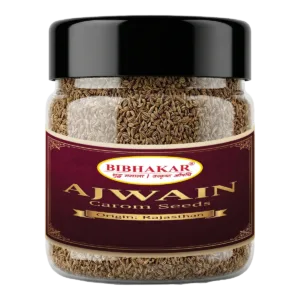
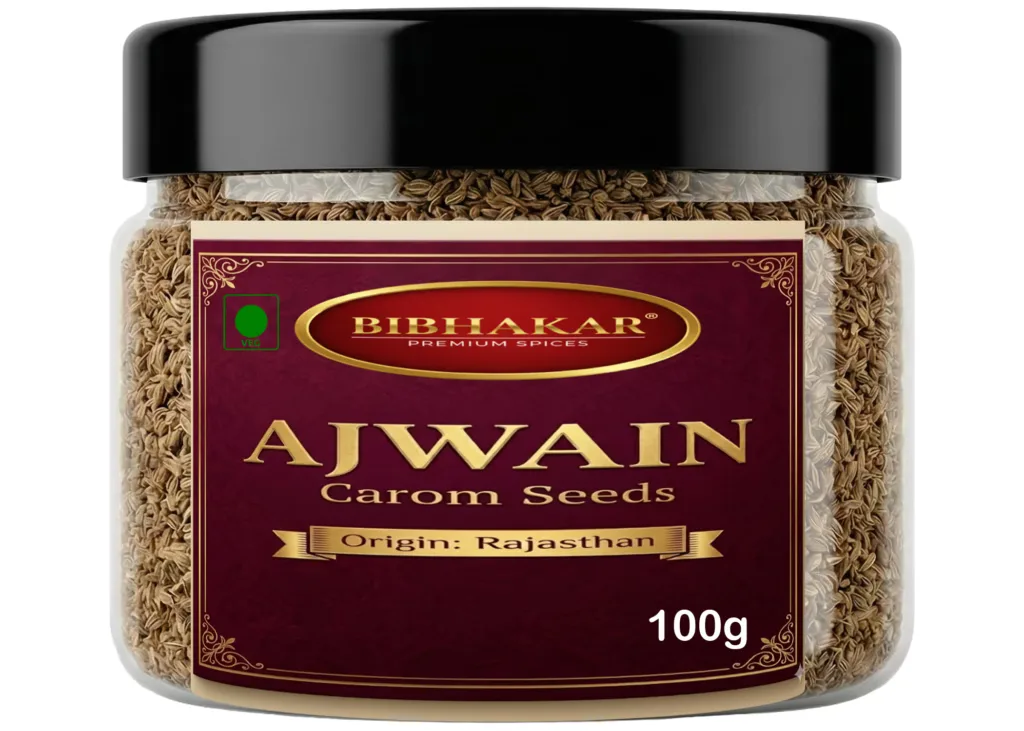
Ajwain in English is called carom seeds. It is also sold as ajowan or bishop’s weed. The botanical name is Trachyspermum ammi. In Tamil it is omam, in Telugu vamu, in Marathi ova and in Kannada oma. Ajwain is a small, ridged, grey-brown seed with a sharp, thyme-like smell and a hot, slightly bitter taste.
Key facts: Bibhakar Spices ajwain
- Names: ajwain, carom seeds (Trachyspermum ammi)
- Origin: Rajasthan
- Form: whole dried seeds
- Jar sizes: 50 g (₹79), 100 g (₹129), 250 g (₹249), 500 g (₹489)
- Price per 100 g: ₹158 (50 g jar) down to ₹98 (500 g jar)
Bibhakar Spices sells whole Rajasthan ajwain (carom seeds) in 50 g to 500 g jars priced ₹79 to ₹489.
What is ajwain called in different Indian languages?
The same seed goes by many names across India. Recipe sites and spice glossaries agree on the common ones below, though spellings vary from region to region.
| Language | Name for ajwain |
|---|---|
| English | Carom seeds, ajowan, bishop’s weed |
| Hindi | Ajwain (अजवाइन) |
| Tamil | Omam |
| Telugu | Vamu |
| Marathi | Ova |
| Kannada | Oma |
| Malayalam | Ayamodakam |
| Gujarati | Ajmo |
| Bengali | Jowan |
| Botanical | Trachyspermum ammi |
If you are shopping online, searching for both “ajwain” and “carom seeds” brings up the same spice.
The English name “carom” is old and rarely used outside spice shops, which is why many Indian recipes written in English still say “ajwain”. When a recipe from another country asks for “ajowan”, it means the same seed. “Bishop’s weed” is an older English name you may still see on imported packs.
Is ajwain the same as cumin or thyme?
No. People mix these up because the seeds look similar and the smell of ajwain reminds many cooks of thyme.
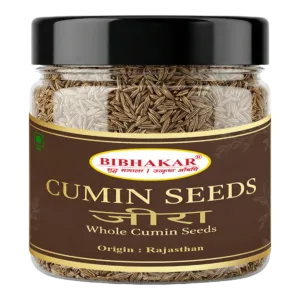
- Ajwain vs jeera (cumin). Ajwain seeds are smaller, rounder and paler. Cumin seeds are longer and thinner. Ajwain tastes sharp and hot; cumin tastes warm and earthy.
- Ajwain vs thyme. Thyme is a leafy herb. Ajwain seeds contain a similar aroma compound, which is why they smell alike, but they are a different plant.
- Ajwain vs celery seed. Celery seed is tiny and darker, with a grassy taste. It is sometimes suggested as a substitute, but the flavour is milder.
If you also buy cumin, our guide to jeera price and quality checks explains how to judge whole cumin seed.
How is ajwain used in the kitchen?
Ajwain is strong, so recipes use it in small amounts. A quarter to half a teaspoon is enough for most dishes. Common uses:
- Parathas and puris. Rub ajwain into the flour with salt and a little ghee before kneading.
- Pakoras and bhajiyas. A pinch in the besan batter gives the familiar sharp note.
- Tadka for dal. Crackle ajwain in hot ghee with garlic and dry red chilli, then pour over cooked dal.
- Snacks. Mathri, namak para and ajwain biscuits rely on it for their flavour.
- Fish and vegetables. Many Punjabi and Gujarati recipes add ajwain to fish fry, arbi and bhindi.
To release more aroma, crush the seeds lightly between your palms before adding them.
How do you check ajwain quality before buying?
- Colour. Even grey-brown to light brown seeds, with no black or very pale grains mixed in.
- Cleanliness. Very little dust, stalk or husk at the bottom of the jar.
- Smell. Rub a pinch. Fresh ajwain smells sharp and strong at once.
- Whole seeds. Few broken pieces. Broken seeds lose their oil faster.
A clear jar lets you check all four before opening it.
How should you store ajwain?
Keep ajwain whole in a closed jar, away from the stove and sunlight. Use a dry spoon. Whole seeds keep their aroma far longer than ground ajwain, so crush only what a recipe needs. Because most recipes use small amounts, a 50 g or 100 g jar lasts most families several months.
For a longer read on the traditions around this seed, see our earlier post, Ajwain unveiled.
Where to buy whole ajwain
Our whole ajwain (carom seeds) from Rajasthan comes in clear jars from 50 g to 500 g. You will find it with jeera, dhaniya and chia in our seeds category.
Frequently asked questions
What is ajwain called in English?
Ajwain is called carom seeds in English. It is also sold as ajowan or bishop’s weed. The botanical name is Trachyspermum ammi. All these names refer to the same small, ridged, grey-brown seed with a sharp, thyme-like smell, used in parathas, pakoras, dal tadka and snacks across India.
What is ajwain called in Tamil and Telugu?
Ajwain is called omam in Tamil and vamu in Telugu. In Kannada it is oma, in Malayalam ayamodakam and in Marathi ova. Spellings vary slightly between regions and recipe books, but these are the names you will see most often on packs and in shops across South and West India.
Can I use cumin instead of ajwain?
You can, but the dish will taste different. Cumin is warm and earthy, while ajwain is sharp, hot and thyme-like. In parathas or pakoras, cumin gives a milder result. For the true ajwain flavour, there is no close substitute, though dried thyme comes nearer than cumin does.
How much ajwain should I use in a recipe?
Ajwain is strong, so start small. A quarter to half a teaspoon flavours a batch of parathas, a bowl of pakora batter or a pot of dal for four people. Crush the seeds lightly before use to release the aroma, and add more next time if you want it stronger.
Sources
- List of spices in English, Hindi and other languages, Spice Up The Curry
- Spices names in English, Hindi, Tamil, Kannada, Marathi, Veg Recipes of India
Filed under Spice Guides · All articles · Shop all spices