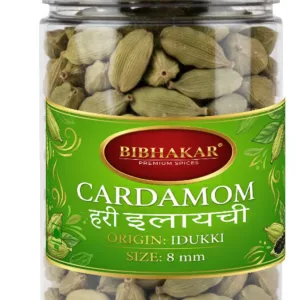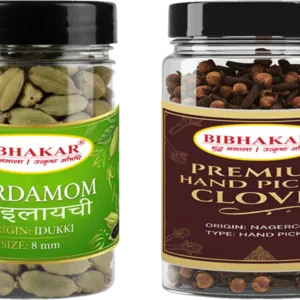
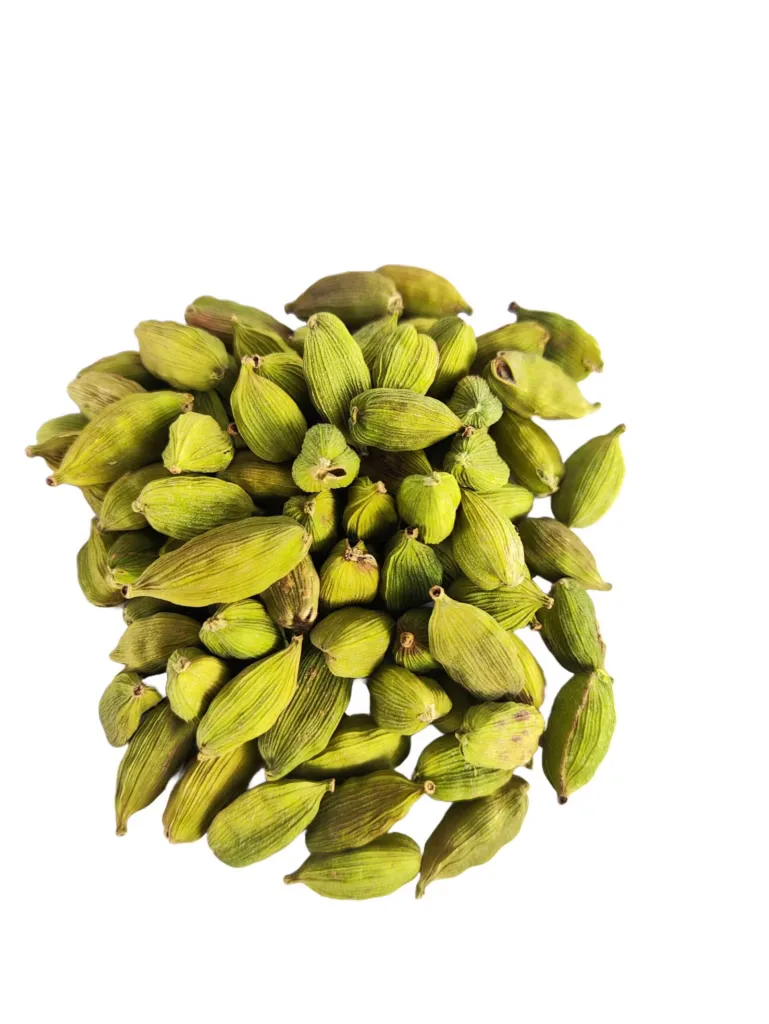
8 mm elaichi means green cardamom pods that are about 8 millimetres across or larger. Traders sort cardamom through sieves with round holes of different sizes, and the pods that stay on top of the larger sieves form the bold grades. Size matters because bigger pods usually hold more seeds, and more seeds mean more aroma.
Key facts: Bibhakar Spices green cardamom
- Name: green cardamom, choti elaichi (Elettaria cardamomum)
- Origin: Idukki district, Kerala
- Grade: 8 mm and above (bold), moisture 10% or less
- Cleaning: extraneous matter held at 0.5% or less
- Jar sizes: 10 g to 500 g, from ₹109
Bibhakar Spices sells Idukki green cardamom (elaichi), 8 mm grade, in 10 g to 500 g jars.
How is cardamom graded by size?
After drying, cardamom passes over a stack of sieves. Each sieve has round holes of a fixed diameter. Pods that are too small fall through. The pods that remain on a sieve belong to that size grade.
Indian cardamom has long been sold under trade grade names that combine origin, colour and size. A teaching text on cardamom grading from the e-PG Pathshala programme lists three common export grades:
| Grade | Full name | Minimum size | Minimum litre weight |
|---|---|---|---|
| AGEB | Alleppey Green Extra Bold | 7 mm | 435 g |
| AGB | Alleppey Green Bold | 6 mm | 415 g |
| AGS | Alleppey Green Superior | 5 mm | 385 g |
“Alleppey Green” is a historic trade name for green cardamom from the Kerala hills. It does not mean the cardamom was grown in Alappuzha town.
An 8 mm sieve is larger than the 7 mm minimum for the extra bold grade. In practice, “8 mm” on a pack tells you the seller picked from the top end of the size range.
Why does litre weight matter as much as size?
Size alone can mislead. A large pod can still be light and half empty if it was picked too early or dried badly. Litre weight is the weight of one litre of pods. Well-filled pods pack more seed into the same volume, so a litre of them weighs more.
That is why grading texts give both a size and a minimum litre weight for each grade. If a seller states only the size, you are getting half the picture. Pressing a pod helps: a full pod feels firm and springs back slightly, while a hollow one crushes flat.
What else separates good elaichi from average elaichi?
Size and weight set the grade, but four other checks decide quality inside a grade:
- Colour. Look for an even green. Yellow, pale or blotchy pods point to sun damage, age or rough drying.
- Split pods. Pods that have cracked open lose aroma faster. A good lot has very few.
- Seeds inside. Open a pod. The seeds should be dark brown to black, slightly sticky, and smell strongly sweet and floral.
- Moisture. Dry pods rattle lightly when shaken. Damp pods feel soft and can grow mould in storage. Our pods are held at 10% moisture or less.
Our full grading and cleaning steps are on The Bibhakar Standard.
Is 8 mm always better than 7 mm or 6 mm?
For aroma per pod, larger is usually better, because a bold pod holds more seeds. For value, it depends on how you use it:
- Chai and sweets use a few whole pods or a pinch of crushed seed. Bold pods give a stronger, cleaner flavour from fewer pods.
- Biryani and pulao often use whole pods for fragrance. Bold pods look better on the plate and release more aroma.
- Grinding into masala hides the size, so a smaller, cheaper grade can work if it is fresh and well dried.
If you are paying for 8 mm, check that the pods in the jar look even in size. A mix of large and small pods means the lot was not sieved to one grade.
How can you check the grade at home?
You do not need a laboratory to check a pack:
- Line up ten pods on a ruler. Most should measure close to 8 mm across the widest point.
- Shake the jar. Pods should rattle softly, not clump.
- Pick five pods at random and open them. Count the seeds and check the colour.
- Smell the open seeds. The aroma should be immediate and strong.
- Look for dust, stalks and empty husks at the bottom of the jar.
Price per 100 g also tells a story. Our live price table and what moves cardamom prices are covered in our guide to elaichi price per kg.
Where to buy 8 mm elaichi
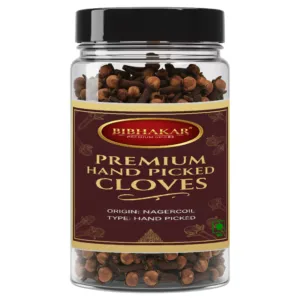
Our Idukki green cardamom, 8 mm comes in clear jars from 10 g (₹109) to 500 g (₹4,049), so you can see the pods before you open the cap. For a gift or a starter pair, the Kitchen Essentials Box adds whole cloves alongside the cardamom.
Frequently asked questions
What does 8 mm mean for green cardamom?
It means the pods were sieved so that pods about 8 mm across or larger remain. Bigger pods usually hold more seeds and give more aroma per pod. A grading reference lists the AGEB extra bold grade from 7 mm upwards, so 8 mm sits at the larger end of that range.
What is the difference between AGEB and AGB cardamom?
AGEB stands for Alleppey Green Extra Bold and AGB for Alleppey Green Bold. The e-PG Pathshala grading text gives AGEB a minimum size of 7 mm and litre weight of 435 g, and AGB a minimum of 6 mm and 415 g. AGEB pods are larger and better filled.
Is 8 mm elaichi worth the higher price?
For chai, sweets and biryani, where you use whole pods, bold 8 mm pods give more flavour from fewer pods and look better in the dish. For spice blends that are ground fine, size matters less, so freshness and dryness count for more than the size grade.
How do I know if cardamom pods are fresh?
Fresh pods are an even green, rattle softly when shaken and feel firm. Open one: the seeds should be dark and slightly sticky with a strong sweet smell. Pale seeds, a weak smell or soft, damp pods suggest old or poorly stored cardamom.